
To form the perfect raid group in World of Warcraft, concentrate on team synergy by balancing tank, healer, and DPS roles. Assign main tanks and healers, then enlist DPS who can off-spec as tanks or healers for added flexibility. Maximize damage output by balancing melee and ranged classes, and secure flex roles among DPS to enhance adaptability. Effective communication and strategic planning are key, so clarify roles and objectives before the raid. For continued success, adapt quickly to boss mechanics and uphold a well-coordinated team with diverse skills.
Key Takeaways
- Effective communication and coordination are essential through voice chat, clear strategies, and well-established roles.
- Balanced group compositions include diverse classes, roles, and specs to maximize overall damage output and adaptability.
- Off-specs among DPS provide backup support for tanks and healers, ensuring group longevity and flexibility in raids.
- Strong leadership, gear optimization, and strategic planning are critical for a well-rounded raid group.
- Regular feedback and active participation foster trust and improve communication within the raid team.
Understanding Raid Dynamics
When forming a raid group, understanding the dynamics of roles and their interactions is essential to guarantee success in various encounters. To achieve this, you need to focus on player synergy, ensuring that each member contributes harmoniously to the group composition. This synergy hinges on a teamwork dynamic where everyone is aware of their responsibilities and how they complement each other. Effective leadership styles also play an important role in maintaining this dynamic. A leader’s ability to coordinate and direct the group can greatly influence the outcome of a raid.
A well-coordinated team is better equipped to handle the challenges presented by complex raid encounters. This synergy facilitates adaptability, allowing you to adjust strategies mid-raid in response to unexpected difficulties.
As you navigate the challenges of raiding, remember that every member is vital to the group’s success, regardless of their role. By fostering a strong teamwork dynamic and understanding the intricate interactions between roles, you can create a formidable raid group capable of tackling even the toughest content.
Tanks and Healers
When forming a raid group in World of Warcraft, you need to plan strategically around your tanks and healers. Clear role assignments and a balance of tasks are essential to make sure that each player contributes effectively to the team’s success.

It’s equally important to maintain flexibility within your group, allowing adjustments to be made depending on the specific needs of each encounter.
Role Assignments
While setting up a raid team, you should aim to have a well-rounded group with a balance of tanks and healers to guarantee successful progression through content. Class synergy and player experience play significant roles here. For example, a team with a Paladin tank and a Druid healer can benefit from the Paladin’s absorption abilities and the Druid’s healing versatility.
When building your team, gear optimization and talent specialization are vital. Ensure your tanks have the necessary gear to withstand high damage, and your healers have talents that enhance their healing capabilities.
To achieve a balance of roles, start with two main tanks and two main healers, then recruit DPS players. For every three to five DPS players, add another healer. It’s vital to have at least one off-tank and off-healer among the DPS who can step up if needed.
When choosing players, look for those with significant raid experience and a good handle on fight mechanics. By focusing on these key aspects, you can construct a well-rounded raid team capable of tackling even the most challenging content.
Balance and Flexibility
To guarantee your raid group excels in endgame content, you must achieve a balance and flexibility between tanks and healers, which requires carefully selecting roles and understanding their respective strengths.
A well-rounded team will have a mix of class diversity, ensuring that each role is covered while also providing viable alternatives if needed. Communication efficiency is also vital, as tanks and healers must work together seamlessly to manage fights effectively.
Flexibility is key, especially when considering player availability. It’s essential to have backup plans and be prepared to adapt if members can’t attend. This flexibility can also extend to roles within the group.
For example, having DPS members who can off-spec as tank or heal can provide a crucial safety net. By balancing tank and healer roles and maintaining flexibility, you can guarantee your group’s success and longevity.
DPS and Flexibility
When building a well-rounded raid group, you should prioritize having a diverse range of DPS (damage per second) characters, ensuring a good balance between melee and ranged classes.
This balance allows your team to adapt to different fight mechanics and maximize overall damage output.
Role Variety Is Key
Flexibility is a key aspect of a raid group’s composition, allowing for a diverse range of damage dealers and supportive roles. Achieving role variety is critical because it enhances class diversity and playstyle synergy, guaranteeing that each player can contribute their unique strengths to the team. This balance is vital as it allows the group to adapt to different encounters effectively. Below are some common raid compositions that demonstrate role variety:
| Raid Composition | Player Breakdown |
|---|---|
| 2/2/6 | 2 tanks, 2 healers, 6 DPS |
| 2/3/9 | 2 tanks, 3 healers, 9 DPS |
| 2/4/14 | 2 tanks, 4 healers, 14 DPS |
Role specialization and group composition go hand in hand. As you add more healers, you create opportunities for offspec and flex roles among your DPS. This flexibility guarantees that your team can handle unexpected absences or changes in strategy. By maintaining a balance between classes and roles, you create a robust composition that can tackle even the most challenging raids.
Balance Melee & Ranged
By considering a balance between melee and ranged damage dealers, you can enhance overall raid performance and mitigate the challenges posed by specific class imbalances. Ensuring a mix of melee and ranged DPS can complement each other strategically, especially considering their synergies and limitations.
Melee classes typically excel in close quarters, relying on positioning and high damage output at short range. On the other hand, ranged classes thrive in open spaces, leveraging their range to attack from a distance. This contrast in range and melee synergy allows for stronger overall damage distribution and more effective target prioritization.
Additionally, implementing diverse playstyles and weapon types can dampen the impact of class-specific imbalances. Inversely, a composition overly reliant on a single type of damage dealer can lead to performance issues and a lack of synergy.
Consequently, it’s essential to maintain a well-rounded lineup that supports both melee and ranged damage dealers to maximize overall performance in raids.
Role Assignment Strategies
To guarantee raid success, begin by assigning two main tanks and two main healers, then recruit DPS players, making certain to include at least one off-tank and off-healer among them in case a main tank or main healer is unavailable. This confirms that you have adequate support for your team and can adapt to absences.
Effective group composition is vital for strategic planning. A well-balanced mix of roles and abilities enhances role synergy and allows for more effective tactical positioning.
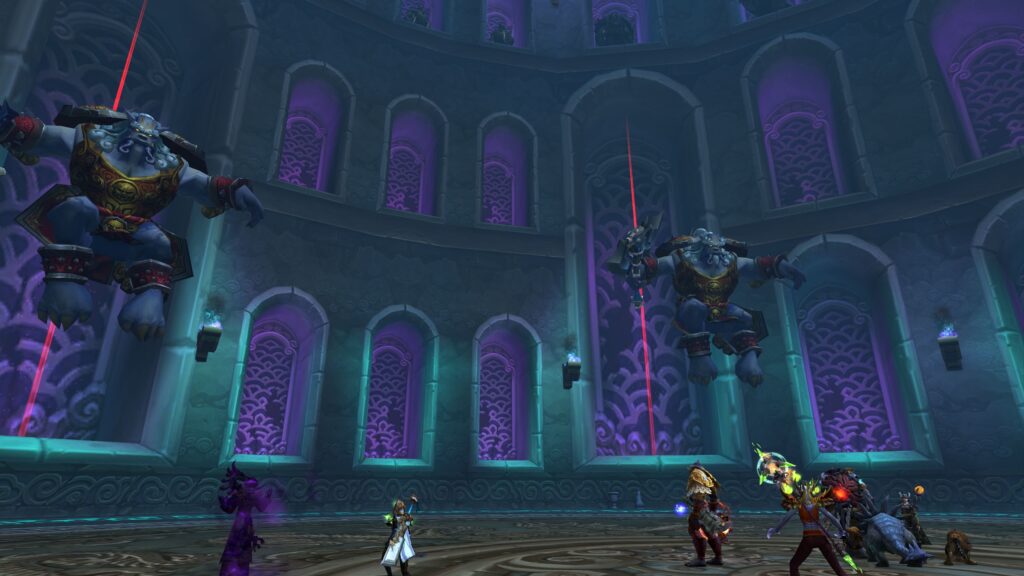
When selecting DPS, aim for a mix of melee and ranged abilities. This diversity will give your raid more options when facing different types of enemies. For example, having champs with area-of-effect (AoE) abilities can benefit from a mix of single-target and multiple-target damage dealers.
Additionally, recruiting players who can off-spec into other roles provides extra flexibility. This dynamic approach helps navigate the challenges of raid content and assures your group is well-prepared for various encounters.
Balancing Classes and Specs
When it comes to balancing classes and specs, you need to find the perfect mix of skills so each team member complements others without redundancy or gaps. To achieve this balance, you must consider class synergy and spec diversity, as well as role distribution and class balance.
Make sure that each class is utilized effectively and that no single class is overpowered or underpowered.
This strategy is vital for success in various types of content, including raids and dungeons.
For example, a well-balanced raid team might’ve a mix of melee and ranged DPS, along with a robust healing and tanking presence. Additionally, each class’s unique abilities should be leveraged to maximize overall performance.
Adapting to Boss Mechanics
Boss mechanics in World of Warcraft are designed to provide unique challenges for raid teams. As you engage in a raid, understanding and adapting to boss mechanics is essential for success.
Here are a few key techniques to master:
- Boss Positioning: Properly positioning the boss can greatly impact the fight. This includes handling cleave and positioning for effective AoE cleanup.
- Mechanics Awareness: Pay attention to the various mechanics involved in the fight, such as adds spawning, debuffs, and during certain phases…
- Quick Adjustments: Be able to adjust your strategy as needed based on the course of the fight. This includes adapting to unexpected timer changes or adapting moves based on the raid’s performance.
- Strategic Adaptation: Continually adapt your strategy to counter the boss’s abilities and movements.
Communication and Coordination
Coordinate with your raid group effectively by enhancing communication during the raid – specifically, by checking the Raid Lead, vetting their experience and achievements, and focusing on equitable gear and skill levels among team members. This guarantees that everyone is on the same page, taking into account the abilities and limitations of each player. Effective communication and strategic planning are key components of a well-coordinated raid group.
Communication Checklist
| Aspect | Key Points |
|---|---|
| Raid Lead | Experience in leading, RAID achievements |
| Gear and Skill | Balance in-player abilities and equipment |
| Strategic Planning | Clear objectives and last-minute adjustments |
Encourage active participation by setting clear expectations and objectives, fostering a dynamic communication system that includes feedback loops. This secures that issues are addressed promptly and any misunderstandings are clarified.
Frequently Asked Questions
What Are the Ideal Raid Group Sizes for Different Raid Modes?
To form an effective raid group, perfect sizes vary by difficulty. For Mythic raids, the inflexible size limit is 20 players (2 tanks, 4-5 healers, and a balanced split of ranged and melee DPS).
In contrast, Normal and Heroic modes scale to accommodate up to 30 players. Best composition involves ensuring roughly 1 healer per 5 DPS players and coordinating roles for a harmonious team.
How Do You Practice and Become a Good Raid Leader?
To become a good raid leader, start by building trust with your team through clear communication. Establish open lines of dialogue to address concerns and resolve conflicts.
Develop decision-making strategies by analyzing raid logs and identifying areas of improvement. Set achievable goals and focus on enhancing teamwork.
Avoid personal biases, stay organized, and lead by example. Good luck.
How Do You Avoid Players Leaving Due to Mechanics Issues?
To prevent players leaving due to mechanics issues, focus on open communication and team building. Clearly explain raid strategies, and involve players in problem-solving tactics.
Regularly solicit feedback to guarantee everyone is on the same page. Motivate players by setting achievable goals and recognizing individual contributions.
What Tools Are Essential for a Successful Raid Leader?
To be a successful raid leader, you’ll need to master leadership techniques and communication strategies.
Effective communication involves active listening, clear instructions, and adapting to team feedback. Conflict resolution skills are also essential, ensuring that issues are addressed before they escalate.
Engage in team-building activities to foster trust and collaboration, promote positive communication, and handle conflicts proactively.
Are There Any Special Considerations for Creating a Raid Team in Busy Time Zones?
To create a successful raid team across busy time zones, you need to coordinate time zones carefully. Confirm all members are available and committed during the chosen raid time.
Take into account short-term objectives like daily quests and long-range ones like boss fights. Schedule raids early in the morning or late at night if necessary.
Maintain open communication to find the best time.
Conclusion
Forming the perfect raid group in World of Warcraft involves a detailed understanding of roles, class diversity, and adaptability.
Two tanks are necessary, while the ideal healer ratio is one for every five to six players.
A balanced mix of classes, including both melee and ranged DPS, is essential for success.
Role flexibility, especially among the DPS, can make up for absences and compensate for unique boss mechanics.
Effective communication and coordination are also crucial to overcoming raid challenges.