
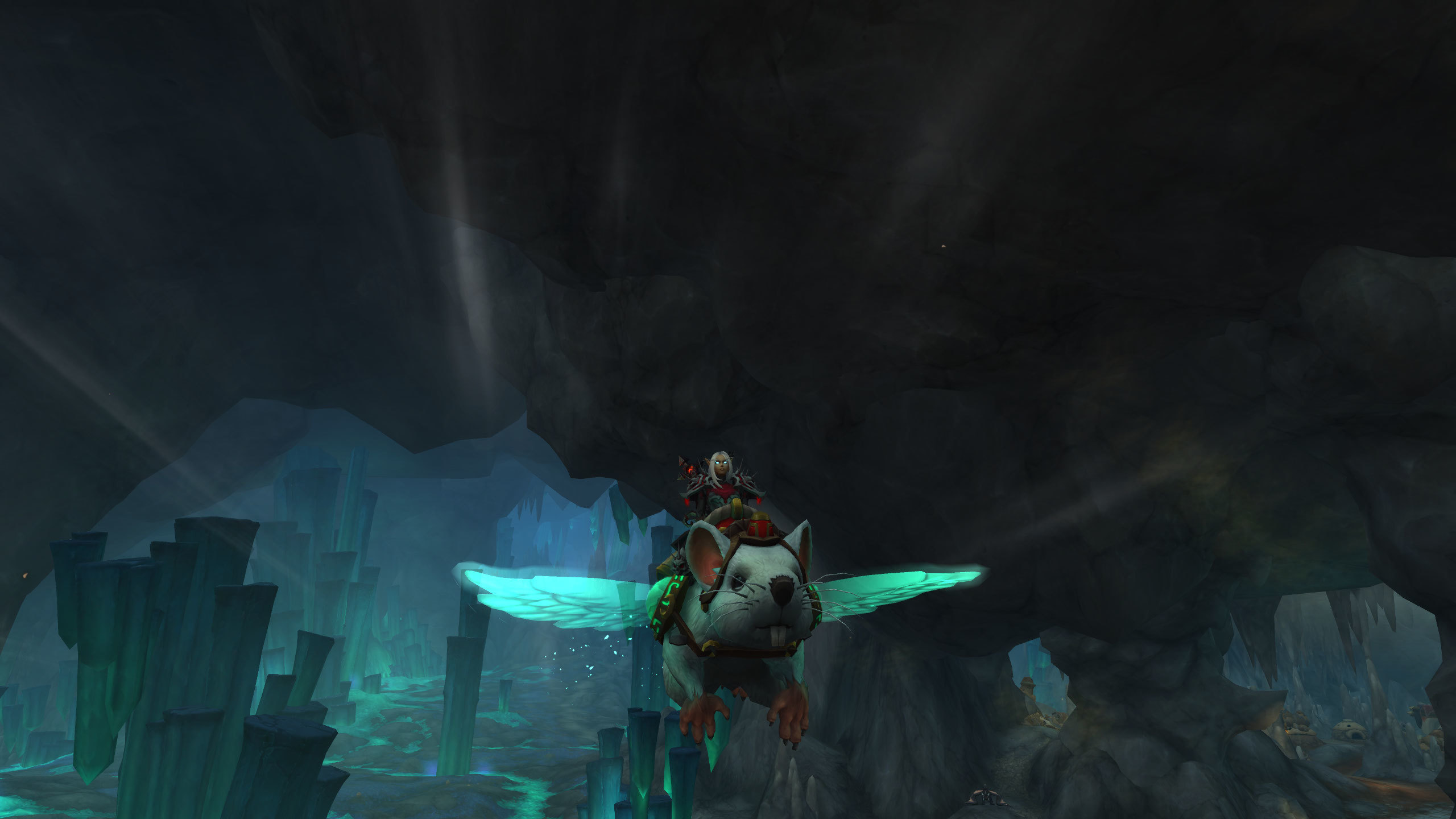

Inventory management has quietly become one of the most persistent friction points in World of Warcraft. As expansions accumulate currencies, crafting materials, and progression tokens, players increasingly spend time managing storage rather than engaging with gameplay. While quality of life improvements have addressed symptoms of this issue, the underlying structure remains character bound in ways that no longer align with modern play patterns.
This article argues that permanent account wide currency and material storage is not merely a convenience feature, but a necessary evolution that supports alt play, reduces friction, and modernizes long term progression systems.
The Legacy of Character Bound Economies
World of Warcraft was originally designed around the assumption that players would focus on a single main character. Early economic systems reinforced this by binding currencies, materials, and progression tightly to individual characters. Storage limitations were part of the intended friction, encouraging specialization and deliberate resource allocation.
Over time, this design aged poorly. Modern expansions actively encourage alt play through catch up mechanics, shared unlocks, and flexible progression paths. However, economic systems did not evolve at the same pace, resulting in a disconnect where players are incentivized to play multiple characters but punished with redundant inventory management.
Alt Play as a Core Gameplay Loop
Alt play is no longer optional or niche. Many players maintain multiple characters to explore different roles, professions, or playstyles. This behavior is reinforced by seasonal content, class balance shifts, and account wide unlocks such as mounts and transmog.
Despite this, currencies and materials often remain siloed. Players must manually transfer resources, track multiple inventories, or regrind identical currencies on each character. This repetition does not meaningfully extend gameplay. Instead, it creates administrative overhead that discourages experimentation and flexibility.
Storage Friction Versus Meaningful Progression
Friction in game systems can be valuable when it creates meaningful decisions. However, inventory friction rarely meets this standard. Choosing which materials to discard, mail, or bank is not a strategic decision, but a logistical one. It tests patience rather than skill or planning.
Account wide storage reframes progression from hoarding to utilization. When players can freely access shared resources, they are more likely to engage with crafting, upgrading, and experimentation. Progression becomes about how resources are spent, not where they are stored.
Benefits of Account Wide Currency and Material Storage
- Reduces redundant farming across multiple characters
- Encourages alt experimentation without economic penalty
- Simplifies inventory management and reduces cognitive load
- Aligns economic systems with existing account wide progression
- Allows players to focus on gameplay rather than logistics
Economic Integrity and Balance Concerns
One of the primary arguments against account wide storage is the fear of economic destabilization. Critics argue that shared currencies could accelerate progression or undermine time gating. However, most modern currencies are already capped or seasonally limited, meaning access is regulated regardless of storage model.
Account wide access does not inherently increase resource generation. It merely centralizes it. Any balance concerns can be addressed through existing caps and acquisition rates. The issue is not how much players earn, but how needlessly fragmented that earning becomes across characters.
Conclusion: Modern Systems Require Modern Infrastructure

World of Warcraft has already embraced account wide philosophy in many areas, including mounts, achievements, and cosmetic unlocks. Currency and material storage remains one of the last major systems resisting this evolution, despite being one of the most frequently cited sources of frustration.
Permanent account wide storage would not trivialize progression or undermine balance. It would simply acknowledge how players actually engage with the game today. By removing unnecessary friction and aligning economic systems with modern play patterns, Blizzard could improve quality of life while preserving meaningful progression. The case is no longer about convenience. It is about coherence.